Yes, many Maryland homeowners can build an accessory dwelling unit (ADU) and rent it to generate additional income. However, whether a specific property qualifies depends on local zoning regulations, the proposed ADU design, permitting requirements, rental licensing rules, and possible owner-occupancy restrictions.
An ADU can provide a consistent source of rental income while adding flexible living space and long-term value to your property. It could be a detached backyard cottage, an apartment above a garage, an addition to the main house, or a converted portion of an existing home. Because the rules vary across Maryland, homeowners should confirm what their county or municipality allows before estimating potential rental returns.
Byrd Design & Build helps Maryland homeowners evaluate their properties, explore practical ADU designs, and navigate the planning and construction process. Careful preparation is especially important when the finished unit will be occupied by a tenant.
Key Takeaways
- Maryland homeowners can often rent out an ADU, but eligibility and rental rules vary by county and municipality.
- Local zoning and permitting requirements matter. Setbacks, lot size, parking, utilities, building codes, and other property-specific factors can affect whether an ADU is allowed.
- Owner-occupancy requirements may apply. Some jurisdictions require the homeowner to live in either the primary residence or the ADU while renting the other.
- Rental approval is separate from construction approval. A completed ADU may still require inspections, a rental housing license, or other local approvals before a tenant can move in.
- Long-term rental income can help offset the cost of an ADU, but homeowners should consider construction costs, financing, maintenance, insurance, taxes, vacancies, and licensing expenses when estimating returns.
- The best ADU design balances rental potential with long-term flexibility, allowing the space to potentially serve as housing for family members, guests, or aging-in-place needs in the future.
What Is an Accessory Dwelling Unit?
An accessory dwelling unit is a secondary, independent living space located on the same property as a primary residence. Although it is smaller than the main home, a complete ADU typically has its own sleeping area, bathroom, kitchen, and entrance.
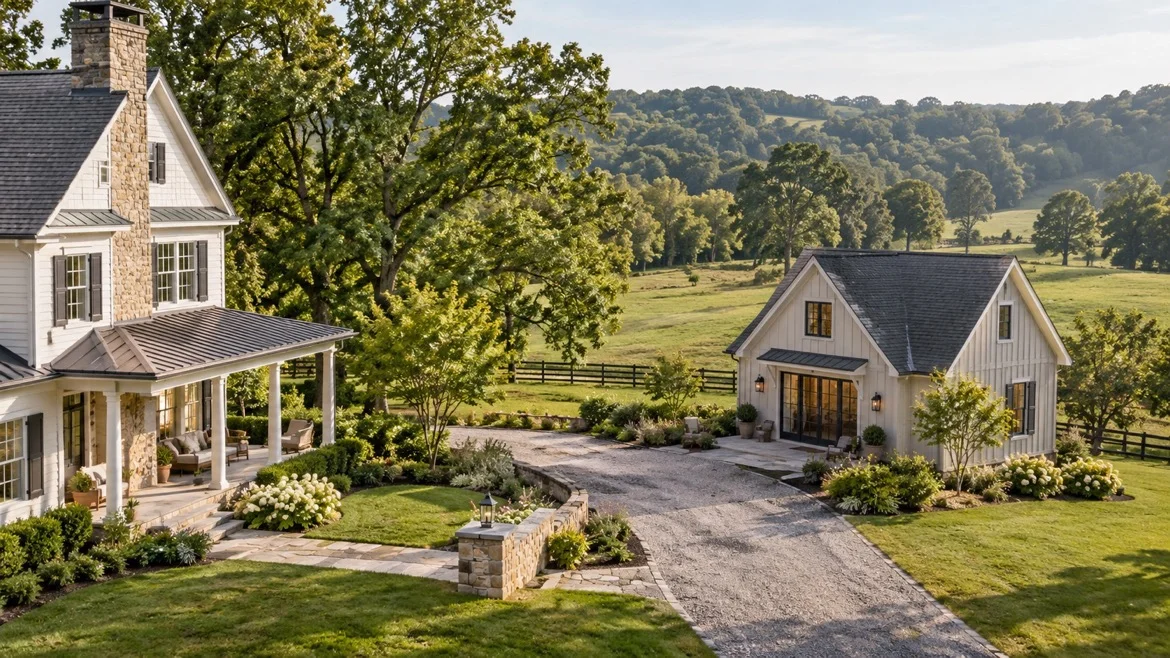
An internal ADU may be created by converting a basement, attic, or another portion of the existing house. An attached ADU is constructed as an addition connected to the primary residence. A detached ADU is a separate backyard structure, while a garage ADU may involve converting an existing garage or building an apartment above it.
Each configuration has different implications for construction costs, privacy, utilities, parking, and local approval. Byrd Design & Build can help homeowners compare these options based on the property’s layout and their rental-income goals.
Can You Legally Rent Out an ADU in Maryland?
Maryland generally supports the development of ADUs as a way to expand the state’s housing supply. State legislation passed in 2025 requires applicable local jurisdictions to adopt laws authorizing qualifying ADUs by October 1, 2026. These local laws must still account for building safety, public facilities, water, sewage disposal, and environmental risks.
The statewide changes do not mean that every homeowner can immediately construct and rent any type of backyard home. Counties and municipalities continue to administer zoning approvals, building permits, inspections, and rental licenses. Requirements may also change as local governments update their codes to comply with state law.
For example, Howard County allows qualifying ADUs to be used for rental income, but the owner must generally live in either the primary home or the ADU when the other residence is rented. The owner must first receive zoning approval and then obtain a rental housing license. Montgomery County also has a licensing process for ADUs and imposes standards related to the property, unit, occupancy, and application.
Therefore, the most accurate answer depends on the property’s exact address rather than Maryland law alone.
Do You Have to Live on the Property?
Owner occupancy is one of the most important rules to investigate when planning an income-producing ADU. Some Maryland jurisdictions require the homeowner to use either the primary residence or the ADU as their principal residence. Under this arrangement, the owner can rent the other unit but cannot treat both homes as separate investment rentals.
In Howard County, for example, the owner must reside in either the primary dwelling or the ADU to rent the other unit. Local rental-license procedures are used to verify compliance. Other jurisdictions may apply different rules, so homeowners should not assume that a requirement in one county applies statewide.
Owner occupancy can still give homeowners considerable flexibility. A homeowner might remain in the primary house and rent the smaller ADU. Later in life, the owner could move into the accessible ADU and rent the larger home. That arrangement can generate more income while allowing the owner to remain on the property.
What Approvals Do You Need Before Construction?
An ADU intended for rental use usually requires zoning approval, building permits, trade permits, inspections, and a rental license. The exact process varies according to the location and the type of ADU being built.
Zoning officials may evaluate the property’s setbacks, lot coverage, building height, ADU size, location, parking, and relationship to the primary residence. A detached unit may need to fit within the area where an accessory structure is allowed. An attached ADU or conversion must comply with requirements that apply to the existing house.
Construction documents will also need to demonstrate compliance with applicable building, electrical, plumbing, mechanical, energy, and fire-safety codes. A legal rental unit may require proper emergency escape openings, smoke and carbon monoxide alarms, safe stairs, adequate ceiling heights, ventilation, and appropriate separation between living spaces.
If the property uses a private well or septic system, its capacity may affect whether another dwelling can be supported. Properties in flood-prone areas, historic districts, or environmentally sensitive locations can also require additional review.
Can an HOA Prevent You From Building an ADU?
Maryland’s 2025 ADU legislation limits the ability of certain deeds, declarations, and similar private restrictions created or amended after the law’s effective date to prohibit qualifying ADUs or their offer for rent. The law includes important exceptions and does not necessarily invalidate every existing restriction.
In addition, short-term rentals may be treated differently from traditional residential leases. An HOA or local jurisdiction may restrict rentals lasting only a few days even when a long-term ADU rental is allowed.
Homeowners should have their deed, HOA documents, and local regulations reviewed before construction. An ADU project represents a substantial investment, and questions about private restrictions should be resolved early rather than after plans are complete.
Can You Use an ADU as a Short-Term Rental?
Permission to rent an ADU does not automatically mean that it can operate as an Airbnb or another short-term rental. Maryland counties and municipalities frequently regulate short-term rentals separately from long-term housing. Additional licensing, occupancy, residency, tax, or location requirements may apply.
Montgomery County, for example, distinguishes an ADU from a short-term residential rental. A homeowner cannot assume that an ADU rental license automatically authorizes vacation-style stays.
Anyone planning an ADU primarily for short-term rental income should verify that use before designing or financing the project. Long-term leasing may be the more straightforward option in communities that limit short-term accommodations.
How Much Rental Income Can an ADU Generate?
An ADU’s rental value depends on its location, size, condition, number of bedrooms, parking, privacy, and access to employment centers or transportation. A professionally designed unit with a private entrance, natural light, functional storage, and in-unit laundry will generally be more competitive than a poorly planned conversion.
Homeowners should compare expected rent with the complete cost of owning and operating the unit. Construction financing, property taxes, insurance, maintenance, utilities, vacancy, licensing fees, and repairs all affect the actual return.
Rental income should not be evaluated using the highest advertised rent in the area. A more conservative projection accounts for occasional vacancies and ongoing expenses. A local real estate professional, lender, insurance agent, and tax adviser can help a homeowner assess the financial side of the project.
Which Type of ADU Is Best for Rental Income?
A basement conversion can be one of the most cost-conscious options when the existing space has adequate ceiling height, suitable access, and a layout that can meet code. However, moisture protection, emergency egress, sound control, and privacy need careful attention.
A garage conversion can make use of an existing structure, but homeowners should not assume it will be inexpensive. The garage may require new insulation, windows, plumbing, electrical service, HVAC equipment, structural improvements, and extensive interior finishing.
A detached ADU typically provides the greatest separation between the homeowner and tenant. This privacy can make the property more appealing to renters, but a detached unit often has higher construction and site-development costs. New foundations, utility connections, grading, drainage, and exterior construction may all be required.
Byrd Design & Build can assess these possibilities in relation to the home, lot, local regulations, and available budget. The best choice is the one that balances approval feasibility, construction cost, tenant appeal, and long-term flexibility.
How Should You Design an ADU for Tenants?
A successful rental ADU should feel like a complete home rather than leftover space. The plan should provide a clear entrance, comfortable living area, practical kitchen, full bathroom, storage, and sufficient natural light. Privacy between the ADU and the primary residence is also essential.
Thoughtful soundproofing can improve the experience for both the owner and tenant, particularly when the unit is attached to or located inside the main house. Durable flooring, easy-to-maintain surfaces, energy-efficient appliances, and individually controlled heating and cooling can reduce operating concerns.
It is also smart to consider future uses. An accessible entrance, wider doorway, curbless shower, or first-floor bedroom arrangement could allow the ADU to serve an aging family member later. Flexible design helps protect the investment even if the homeowner’s rental plans change.
Is Building an ADU for Rental Income Worth It?
An ADU can be a worthwhile investment when the property qualifies, local rental demand is strong, and the project is planned around realistic costs. In addition to producing income, the unit can provide housing for relatives, accommodations for guests, a private home office, or a future aging-in-place solution.
The project should still be approached as both a construction decision and a small rental business. Homeowners need to understand licensing, lease requirements, insurance, maintenance obligations, tenant screening, and tax implications. Building legally from the beginning helps protect the homeowner, tenant, and property value.
Build a Rental-Ready Maryland ADU With Byrd Design & Build
Building an ADU for rental income requires more than choosing a floor plan. The unit must work with the property, satisfy local regulations, pass inspections, and offer the comfort and privacy tenants expect.
Byrd Design & Build brings more than 20 years of experience to custom homes, additions, renovations, and ADU projects throughout Maryland. Its design-build approach helps coordinate planning, design, budgeting, permitting, and construction within one organized process.
If you are considering a basement apartment, garage conversion, attached suite, or detached backyard ADU, contact Byrd Design & Build. The team can help you determine what is practical for your property and create a high-quality living space designed to support both rental income and your home’s long-term value.